Soldiering and Leisure Activities in Civil War Kentucky
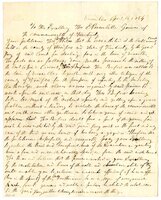
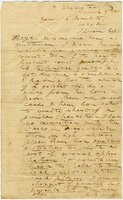
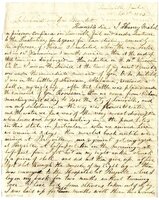
In April 1863, Samuel T. Bassford—a Union soldier stationed in Mt. Sterling, Kentucky—wrote to his younger brother, John, describing the day-to-day experiences of soldiering during the Civil War. Bassford explained that his days were filled with “some good times and some hard.”[1] A typical soldier’s day included roll call in the morning followed by drill. Soldiers then paused for breakfast. In the afternoons, they drilled more but might also stand for dress parade if new orders or court martials needed to be read. On the weekends, soldiers could anticipate dress inspections in addition to their regular weekday activities. In other words, a Civil War soldier’s daily routine could be, as historian Bell Irvin Wiley puts it, “a dull, dreary chore.”[2] It was certainly not dull in those instances when Union soldiers “faced the elephant,” a colloquial phrase soldiers on both sides used during the war to describe their first experience in combat. Combat was a world altering experience that assailed all aspects of a soldier’s ability to perceive the world around them. It was chaotic and spontaneous, further challenging a soldiers’ ability to cope.[3] Bassford alluded to this in describing the dangers of picket duty, writing that “I don’t think the[re] is much fun in it . . . when you don’t know [if] the rebs will shoot you before morning.”[4]
Given the monotonous and dangerous life of soldiering, leisure time, or the “good times” as Bassford puts it, was critically important to soldiers on both sides in the war when available. These moments gave soldiers an opportunity to engage in hobbies and form relationships with their comrades. Leisure moments also offered soldiers an opportunity to emotionally exhale, recalculate their senses, and maintain their humanity after episodes of intense combat and exposure to tremendous horrors.[5] Furlough was obviously the best opportunity for soldiers to recover from the hardships of the war, but furloughs were few and far in between, especially late in the war when there was almost a constant state of campaigning. Therefore, the few moments that soldiers had to themselves were precious. Soldiers chose to spend their leisure moments in different ways. Some used their down time to write letters home, read, or play music. Others enjoyed sports, fishing, and general tomfoolery with their comrades. Sam Bassford mentioned that Union soldiers at Mt. Sterling enjoyed playing “base ball” in their down time: “the boys have some high times playing ball and pitching quats.”[4] Examples of Civil War soldiers pursuing leisure activities are frequent throughout the Civil War Governors of Kentucky Documentary Edition (CWGK) collection, making it a valuable source base for parties interested in understanding how Civil War soldiers in Kentucky chose to spend this valuable time.
Unsurprisingly, soldiers, if stationed near a town or city, loved to frequent theaters, brothels, saloons, and of course the horse racing track. Union soldiers (and Kentuckians writ large) could be found in these establishments perhaps gambling and playing a card game known as Faro, or “Farobank.” Faro was the most popular card game played in the United States during the nineteenth century until poker surpassed it in the early twentieth century. The game’s simplicity lent to its popularity. Played with one deck of cards, a single player was designated as the “banker” with additional players called “punters.” Each player received a turn as banker during a game. Punters placed bets on one of thirteen spade cards, representing all suits, arranged in numerical order on a table known as the “layout.” From there, the banker shuffled the remaining cards in the “dealing box,” after which they drew two cards—the “player’s card” and the “banker’s card.” The banker’s card was placed on the right side of the dealing box and represented the losing card while the player’s card, or winning card, was placed on the left side. All bets on cards, despite suit, with the same denomination as the banker’s card were lost.[6]
Despite its popularity, dealing Faro in Kentucky during the 1860s was punishable by a two hundred to five hundred dollar fine. Union captain Thomas Buford found this out the hard way. In April 1864, Buford ventured to Versailles, Kentucky to inspect work on a nearby railroad. While there, Buford indulged in “ardent spirits” and participated in a game of Faro. Buford was later charged with illegal gambling and ordered to pay a hefty fine.[7] Friends of Buford later petitioned Kentucky governor Thomas E. Bramlette to pardon him and remit his fine on the premise that his involvement was the product of “generous and noble impulses.” Buford was not unique in his transgressions. In March 1865, John B. Huston wrote on behalf of another Union captain, Henry C. Lloyd, to Bramlette requesting that he remit a fine of $500 that Lloyd incurred “for faro dealing.” According to Huston, Lloyd was well-aware of the prohibition against gambling, even admitting his guilt, but asked for remittance of the fine on the basis that he had made no money and had engaged in the card game “only for amusement.”[8]
Union officers, such as Buford and Lloyd, were quite aware of the prohibitions against and consequences of gambling and dealing Faro. Yet, they still engaged in the activity. Why? Card playing and gambling were valuable moments of leisure that were well worth the penalties of being caught participating in prohibited activities. A card game was about more than making a profit. It was a moment in which a soldier could distract themselves from the horrors of combat, the doldrums of soldiering, and even temporarily relieve their melancholy associated with homesickness or the loss of a comrade. Thus, these distractions were emotionally nourishing and were important for promoting positive morale and readiness within both armies.
In the bourbon state, Civil War soldiers in Kentucky also enjoyed drinking alcohol during their leisure moments. Despite national aversions to alcohol in the 1860s with the rise of the Temperance Movement, Union and Confederate soldiers were not prohibited from consuming beer, wine, and other strong spirits. According to Megan L. Bever, military policy in both armies generally allowed officers to maintain private stores of spirits. Union and Confederate military authorities also granted enlisted men rations of alcohol, usually whiskey, brandy, or sherry, for a variety of reasons. Military physicians believed that alcohol fortified a soldier’s body and mind, helping them remain fit for duty. Alcohol was also a safer alternative to drinking water and could provide relief to wounded soldiers, or even serve as a low-grade anesthetic when surgeons were without other methods. At an individual level, Victorian men believed that moderate alcohol consumption was a more appropriate way to deal with war trauma and represented democratic expressions of masculinity. That said, officers were not uniform in their views on alcohol consumption and neither army tolerated drunkenness.[9]
There were exceptions. For example, Union general U.S. Grant was a consistent whiskey drinker—Old Crow rumored to have been his preferred brand. Grant was long plagued by accusations of drunkenness before the war but especially during it. Such charges during the war were perhaps more so the product of political attacks orchestrated against him by rivals within the U.S. Army to stifle his meteoric rise in prominence rather than a reflection of his actual behavior. Nonetheless, when on one occasion President Lincoln was informed of a charge against Grant for drunkenness, Lincoln responded with a question of what brand whiskey he drank so that he could send a barrel of it to his other commanders.[10]
Not every soldier had the luxury of the political favor, and when excessive drinking interfered with their duty, military and civil authorities punished them accordingly. In 1862, Lowdy Howard, a young Union soldier of twenty-three who had received a bayonet wound in a skirmish near Somerset, Kentucky, was given a two-year prison sentence for assaulting a German tavern keeper after coming under “the excitement of liquor and under the stimulents [sic] of evil companionships.” Howard petitioned Gov. James F. Robinson for a pardon, mentioning that no serious harm came to the man in the fracas, but it seems that Robinson did not grant him clemency.[11] Elements on both sides of the war believed that sobriety, or at least restricted drinking, was an important contributing factor in winning the struggle. Thus, soldiers, such as Howard, who crossed a line were perhaps made an example of to others regarding the consequences of reckless drinking. That said, alcohol’s perceived positive aspects outweighed officers’ concerns regarding potential drunkenness, and both armies understood that a complete prohibition of alcohol was impractical and bad for troop morale.[12]
Not every soldier stationed in Kentucky who dealt cards, gambled, or drank to excess was arrested. Yet, the character of the documents in the CWGK collection, specifically legal petitions, spotlights when soldiers were caught. These moments inform researchers of the leisure activities that soldiers pursued when not consumed by their daily responsibilities or in the thicket of combat. Whether it was drinking, playing baseball, or dealing cards, down time was critically important for collective troop morale as well as a soldier’s individual emotional well-being. Soldiers needed these moments to decompress after longs days of drilling and maintain their humanity after episodes of combat. Accordingly, CWGK has captured these instances in which primarily Union soldiers in Kentucky attempted to cope with the unprecedented societal and emotional chaos of the Civil War.
Footnotes
- ^ Samuel T. Bassford to Brother John, “Letter with baseball illustration,” 19 April 1863, Mount Sterling, Ky., Acc. No. SC10391, Kentucky Historical Society, Frankfort, https://kyhistory.com/digital/collection/MS/id/218/rec/1.
- ^ Bell Irvin Wiley, The Life of Billy Yank: The Common Soldier of the Union (Bobbs-Merrill Co., 1951), 47–49, 54. See also Wiley’s book on Confederate soldiers, The Life of Johnny Reb: The Common Soldier of the Confederacy (Louisiana State University Press, 1943). Peter S. Carmichael’s The War for the Common Soldier: How Men Thought, Fought, and Survived in Civil War Armies (The University of North Carolina Press, 2018) is a notable work among many that focus on Civil War soldiers’ daily existence.
- ^ Earl J. Hess, The Union Soldier in Battle: Enduring the Ordeal of Combat (University Press of Kansas, 1997), 45–46.
- a, b Samuel T. Bassford to Brother John, “Letter with baseball illustration.”
- ^ Hess, The Union Soldier in Battle, 21; Anne C. Rose, Victorian America and the Civil War (Cambridge University Press, 1992), 138.
- ^ David Parlett, Oxford Dictionary of Card Games: How to Play Hundreds of Popular and Classic Games (Oxford University Press, 1992), 107.
- ^ J. Wallace Harper et al. to Thomas E. Bramlette, 16 April 1864, Office of the Governor, Thomas E. Bramlette: Governor's official correspondence file, petitions for pardons, remissions, and respites 1863–1867, BR10-43 to BR10-44, Kentucky Department for Libraries and Archives, Frankfort, Civil War Governors of Kentucky Digital Documentary Edition, discovery.civilwargovernors.org/document/KYR-0001-004-0681.
- ^ John B. Huston to Thomas E. Bramlette, 3 March 1865, Office of the Governor, Thomas E. Bramlette: Governor's official correspondence file, petitions for pardons, remissions, and respites 1863–1867, BR12-423, Kentucky Department for Libraries and Archives, Frankfort, Civil War Governors of Kentucky Digital Documentary Edition, discovery.civilwargovernors.org/document/KYR-0001-004-1569.
- ^ Megan L. Bever, At War with King Alcohol: Debating Drinking and Masculinity in the Civil War (The University of North Carolina Press, 2022), 2, 5–8, 15, 16, 25, 27.
- ^ Ron Chernow, Grant (Penguin Books, 2018), 293.
- ^ Henry Mabel to Thomas E. Bramlette, 9 November 1863, Office of the Governor, Thomas E. Bramlette: Governor's official correspondence file, petitions for pardons, remissions, and respites 1863–1867, BR8-408, Kentucky Department for Libraries and Archives, Frankfort, Civil War Governors of Kentucky Digital Documentary Edition, discovery.civilwargovernors.org/document/KYR-0001-004-0258.
- ^ Bever, At War with King Alcohol, 14.